The 2018–2030 A Force for Inclusion Defence Diversity and Inclusion Strategy remains publicly hosted and linked on the official RAF recruitment website in 2026. Eight years on and three years after the RAF was forced to admit unlawful discrimination against white male pilot applicants, this document continues to shape the institution’s approach to recruitment and promotion.Its unfairness is not in crude “reject white men” language. The strategy is carefully worded. The real problem lies in a system of top-down demographic pressure. This system turns representation into a measurable performance goal. It creates powerful incentives to deprioritise or delay highly qualified candidates from the majority group. These candidates are often white males. This happens whenever the numbers for female, BAME, or LGB recruits fall short.Here is how it could, and as the official 2023 RAF recruiting inquiry confirmed, did sideline a very talented and gifted young white male pilot applicant:
1. Recruiters and Leaders Are Personally Accountable for Demographic “Increases”
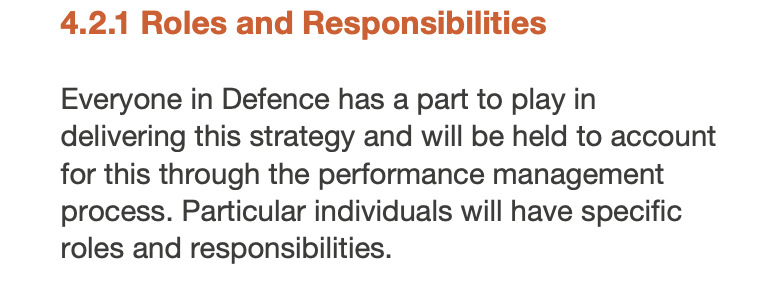
“Everyone in Defence has a part to play in delivering this strategy and will be held to account for this through the performance management process.” “TLB holders will be responsible and accountable to the Defence Board through departmental holding to account mechanisms for delivering against the objectives; commitments; levels of ambition and milestones reflected in their Command Plans.”A recruiter or selection board under pressure to show “significant improvements” in the percentage of female or BAME recruits has a direct career incentive to fast-track or pull forward candidates from those groups. Even if a young white male aces every aptitude test, leadership exercise, and fitness standard, he can be paused or rejected simply because the pipeline is already “over-represented” by people who look like him.This is precisely what happened. 161 women and ethnic-minority candidates were accelerated ahead of others. At least 31 white male pilot trainees were unlawfully held back.
2. Explicit Demand for “Significant Improvements” in Recruitment Pipeline Percentages
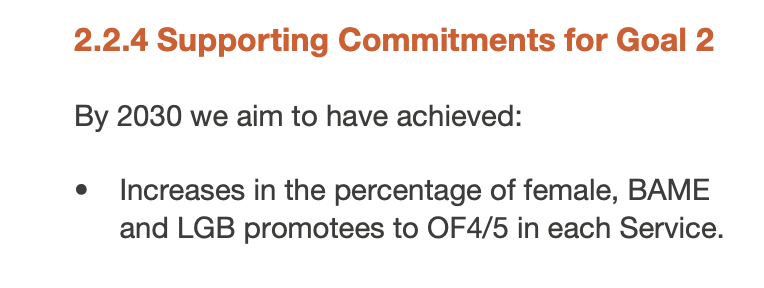
“By 2030 we aim to have achieved significant improvements in:
• The percentage of female, BAME and LGB recruits to the Single Services (Regular and Reserve) and Civil Service…
• The percentage of female, BAME and LGB personnel in the recruitment pipeline stages for Officers and Other Ranks in the Single Services.”There is no clear safeguard stating “only if they are equally or more qualified.” The goal is demographic balance, not maximum talent.A brilliant 18- or 22-year-old who dominates the Computer-Based Aptitude Test and Officers and Aircrew Selection Centre can still hear: “We’re not taking more candidates like you right now.” This happens because the stats need boosting elsewhere.
3. “Positive Action Programmes” and Reviews to Remove “Barriers”Screenshot 3: Insert screenshot from Pages 20–21
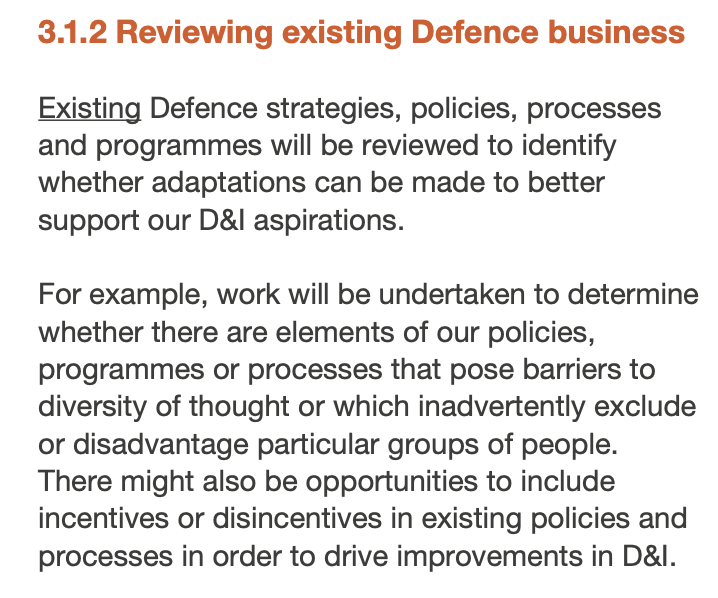
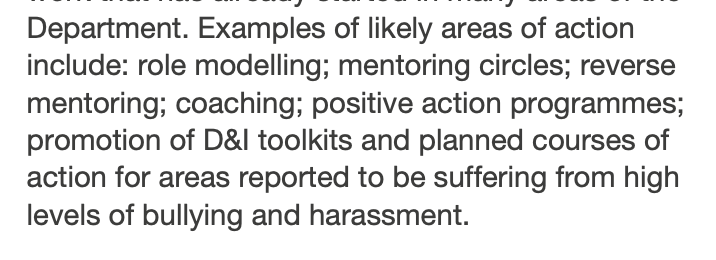
The strategy openly calls for a deep review of all existing rules, policies, and processes in the RAF and wider Defence.
Exact wording from the document (Page 20):
“Existing Defence strategies, policies, processes and programmes will be reviewed to identify whether adaptations can be made to better support our D&I aspirations. … There might also be opportunities to include incentives or disincentives in existing policies and processes in order to drive improvements in D&I.”
In plain English, this means:
Change the system if it helps hit diversity targets. Add rewards for meeting the numbers or penalties for missing them.It then lists examples of “targeted interventions” the RAF should consider (Page 21), including “positive action programmes”.
Positive action sounds harmless, but in practice it allows recruiters and selection boards to give extra help such as priority interview slots, fast-tracked training places, or adjusted processes to women, BAME, and other under-represented groups.
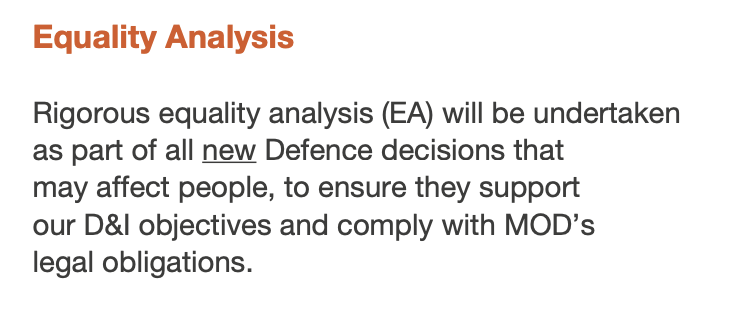
Combined with the strategy’s requirement for mandatory Equality Analysis on every decision, this creates real pressure on selection boards.
Before offering a pilot training place, they are effectively encouraged to ask:
“Will accepting this candidate make our demographic targets harder to hit?”Even if a young white male is clearly the most gifted and highest-scoring applicant in the entire room with outstanding aptitude test results, leadership skills, and fitness, his demographic profile (being a white male) can turn him into a problem that needs to be “managed.” Instead of simply picking the best person for the job, the system nudges boards to consider race and gender as important factors. Merit alone is no longer enough.
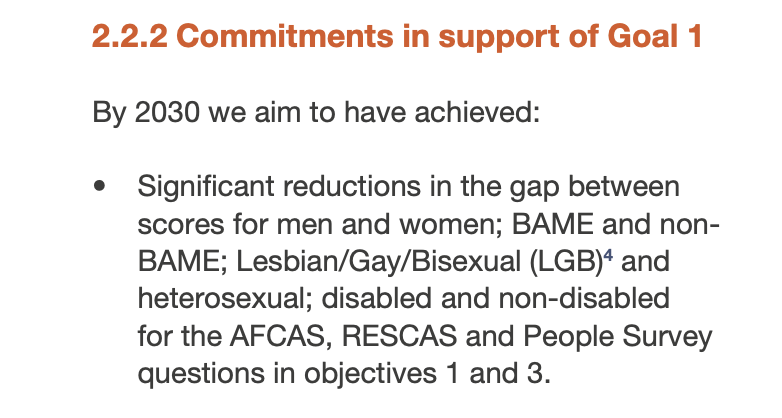
4. Constant Monitoring of “Gaps” Between Groups