In a recent post on X, Elon Musk captured the essence of artificial intelligence’s next leap. He wrote, “The future of AI is primarily video understanding and generation, because photons are by far the highest bandwidth form of communication. These are essential tools for AGI.” He also noted that xAI’s Grok Imagine tool runs at a positive gross margin, unlike many competitors.
Elon Musk speaks to engineers during a recruitment gathering in October 2024. Photo credit: Teknium (@Teknium) via X. This rare behind-the-scenes image captures the collaborative energy behind Grok Imagine, video understanding, and Elon Musk’s photon-driven vision for AGI at xAI.
Why Photons and Video Are the Foundation
Photons, the particles of light, operate at frequencies around 10 to the 14th power hertz in the visible spectrum. This gives them unmatched data-carrying power. A single high-resolution video frame can deliver millions of bits per second, far surpassing text, audio, or raw sensors.
Human vision alone sends roughly 10 million bits per second to the brain, using the largest portion of our neural capacity. For AGI to understand and interact with the physical world exactly as humans do, video is not optional. It is the primary interface.
Musk has stressed this principle before, linking it directly to real-world systems.
Tesla Already Lives This Reality
Musk connected the dots in an earlier post: “The car AI is photons in, controls out. Just like humans. This is the path to AGI.”
Tesla’s AI team now creates physics-accurate video simulations for Full Self-Driving training. These synthetic worlds run on a single H100 GPU per HD camera equivalent, generating data at scales impossible through real-world driving alone. Musk has said this capability has existed for some time, with affordable consumer versions expected in the next two to three years.
xAI’s Grok Imagine Delivers Today
At xAI, Grok Imagine leads image-to-video benchmarks. Users can create video stories from text prompts, extend existing clips, and generate 10-second sequences with upgraded audio. Musk highlighted these advances, encouraging everyone to try the tool on grok.com or the mobile app.
While OpenAI recently shut down its loss-making Sora platform, xAI proves video AI can be both powerful and profitable.
How This Changes Your Everyday Life
Think about your daily routine. Your Tesla can “see” the road through video exactly as your eyes do, handling complex traffic, parking, and decisions in real time to keep you safer.
On your phone, Grok Imagine will let you generate personalized video clips for quick explanations, family memories, or entertainment during a commute.
This high-bandwidth AI will quietly reshape how you learn, travel, create, and connect, turning abstract intelligence into a practical tool woven into every moment.
Musk’s insight is more than a technical note. It is a clear roadmap. By mastering photons, the highest-bandwidth medium, Tesla and xAI are building AGI through the same sensory flood that shaped human minds.
When it arrives, AGI will perceive the world in light, and that future starts in our everyday experiences today.
The future of AI is primarily video understanding and generation, because photons are by far the highest bandwidth form of communication. These are essential tools for AGI.
Worth mentioning that Imagine is positive gross margin for @xAI, not a money loser.
(Cannes, France) Palm trees swaying with the blue of the ocean as the backdrop. Legendary Cannes, France. This was the scene along the French Riviera when Elon Musk arrived with his adorable four-year-old son, X. Elon was invited to talk at the Cannes Lions conference. At the Lumiere Theater, all 2300 seats were sold out so Europeans could have the rare chance to hear Elon Musk in person. The interview began.
The interviewer, Mark Read, started with a provocative first question, saying, “Welcome to the heart of the advertising industry, now back in November you had a message to us, you told us to go f*ck ourselves so maybe we start there, this is a serious question! Why did you say that and what did you mean by that?”
I think you will like Mark Read’s style, he did an overall good job interviewing Elon.
In this article, I’ll bring you through the entire interview. I’ve explained in my prior articles that I agree with thousands of other people that Elon Musk is a rare and historical figure and so every interview is important and it is my goal to record as many as I can in written form for this reason. There are scores of videos of his interviews. There are few places you can read them. Many people learn by reading. Enjoy the interview.
FREEDOM OF SPEECH
Elon: (answering the first question) Well, first of all, it wasn’t to advertisers as a whole, it was with respect to freedom of speech. I think it is important to have a global free speech platform where people from a wide range of opinions can voice their views, and in some cases, there were advertisers who were insisting on censorship, and at the end of the day, if we have to make a choice between censorship and money, or free speech and losing money, we’re going to pick the second. We’re going to support free speech, rather than agree to be censored for money which is I think the right model decision.
JUST IN: Thousands of users are canceling Disney+ subscriptions after Elon Musk told CEO Bob Iger to "go f*ck yourself" for blackmailing him over advertising on X. pic.twitter.com/NEFtHZJoGn
Elon: Now of course advertisers have a right to appear next to content that they find compatible with their brands. That’s totally fine. I think that’s again a choice of an advertiser to appear next to content that they think fits with their brand. that’s totally cool.
What is not cool is insisting that there can be no content that they disagree with on the platform.
It’s an important distinction here that we don’t want to take money to censor broadly on the platform, I think that would be wrong.
I think free speech is the bedrock of democracy and in order for X to be the public square of the world, it’s got to be a free speech platform.
Now that doesn’t mean people can say illegal things, it’s free speech within the bounds of the law, but not going further than the law for a particular country which I think it’s imperative that the people have the right to speak.
But by the same token, advertisers have a right to appear next to content they feel is compatible with their brand.
Read asked Elon to speak about brand safety on X.
Elon: I believe in, sort of freedom of choice, in the sense that advertisers have a right to appear next to content that they think is compatible with their brand, you know, a company like Red Bull will probably be more adventurous than some other brands that are selling baby toys.
Read asked Elon if he regrets making any posts on X.
Elon: Not every post I make is a banger. I do shoot myself in the foot from time to time. At least you know it’s genuine. It’s not some sort of PR department deciding things.
Elon: If you’re a normal human being and you speak freely, there are times when you will say things that you will regret or are foolish of course, but if you’re constantly going through a filter, you’re not being real so I guess I think it’s better to be real then to go through a filter.
ADVERTISING ON X
This is one of my favorite parts of the interview. In this segment on advertising, Elon explains:
Targeting Ads is key: Effective advertising depends on how well it is targeted to the wants and needs of the individual. Ads that are relevant to the user are considered “content,” while irrelevant ads are “spam.”
Artistic and entertaining ads are valuable: These ads add value to the user’s experience.
Improving ad matching: X has made significant improvements in matching ads to users’ interests through AI and vector space modeling. This increases the likelihood that users on X will find the ads relevant and engaging.
Brand safety: X has received an A+ rating from third-party reviewers for brand safety, ensuring that ads are shown in a safe and appropriate context.
Reaching influential users: X is an effective platform for reaching influential decision-makers, such as company executives and intellectuals. These users are more likely to be active on X than other social media platforms.
Read: You view the best advertising as content.
Elon: There is a wide range of advertising, and the usefulness of advertising varies dramatically. So if you are shown an ad for a product or service that you want, when you want it, that is content. If you are shown an ad for a product that you would never buy, that is spam.
Elon: So the advertising depends on how effectively it is targeted to the wants and needs of the individual varying from total spam to essential content.
I’m actually a fan of advertising that is artistically interesting and that is entertaining, really the acid test being that, after you see the ad, do you regret seeing the ad?
Did you want those seconds back from your life? Or do you think that was actually a really interesting ad? Sometimes even if you’re not gonna buy the product, the ad is so entertaining or beautiful, that you nonetheless were happy to have seen it.
Read asked Elon if he’d seen Vogue magazine.
Elon: Yeah, Vogue is primarily advertising. It’s beautiful ads.
Read: So how are you going to make X a place where the ads are as good as the rest of the content?
Elon: Previously with old school Twitter, there was essentially no targeting or there was no matching of users to ads, so the only ads that really kind of made sense for old Twitter were the real big brand ads where you can’t miss essentially, so if it’s a McDonald’s or a Coco-Cola ad, you can’t miss. Half the audience is going to be interested in it.
Since then, we’ve dramatically improved the ad matching to the person. We’re moving to, sort of, a fully AI system where the more somebody uses the system, the more we understand the needs.
We populate a vector space of that user and when content is added to the system, whether it is actually just a content post or an ad, they’re both treated in the same way and as a piece of content which could be an ad could be not an ad. When it goes through the system, it also populates a vector space and then we correlate the two vector spaces and that gives a very high probability that someone will be interested in the ad.
Read: What would you say to advertisers who have been on the platform and are thinking of coming back? What would your message be to them?
Elon: I think it’s worth trying out and I’d be interested in critical feedback. We are very focused on having ads be shown to people who would find the ad interesting. That’s something we have done and made a lot of progress on and will make a lot more progress on.
From a brand safety standpoint, I think at this point, every third-party reviewer has given us an A+ on brand safety. At this point, it is really very good from a brand safety standpoint.
𝕏 is now TAG Brand Safety Certified. This platform has deployed every single brand control the marketplace has requested over the past 12 months.
The advertisers are seeing results. Not just from 𝕏’s data, but also by third-party measurement partners, Integral Ad Sciences &… pic.twitter.com/m4XgzBzXJ9
Elon: Probably the biggest thing for the X platform is, if you’re trying to reach senior decision makers if you want to reach the most influential people in the world, who are not just social media influencers, but actually run companies, run countries, and are the intellectuals of the world, the people who are the right ones to reach, then the X platform is by far the best.
I mean if someone were trying to reach me with an ad that would absolutely be the place to put an ad. And if you were trying to reach Marc Benioff or Michael Dell, they actually use the platform. You know, if you are trying to reach Marc Andreessen or any one of a number of people, it’s almost the only way to reach them. They’re not watching TV, they’re not doing TikTok videos and so although X is smaller than the other social media networks, roughly 5 to 600 billion users per month and I think it’s 260 million per day. They are the most influential people in the world, so if you wanna reach them, this is the best place to go.
Elon is optimistic about the potential of AI to create abundance and enhance human capabilities, but he also emphasizes the importance of AI safety and the need to be cautious about its development. In this part of the interview at Cannes, Elon shared five main points.
Optimistic View: Elon believes there’s an 80% chance that AI will lead to a future of abundance, where goods and services are available to everyone, and work becomes optional.
AI safety concerns: Elon emphasizes the importance of training AI to be truthful and curious. He points to the fictional example of HAL 9000 in “2001: A Space Odyssey” as a cautionary tale about AI being forced to lie.
AI creativity: AI will be creative and capable of producing original art and music. Elon suggests that AI could enhance human creativity and intelligence through Neuralink.
Optimus robot: Tesla Optimus is seen as a fully functional humanoid robot capable of performing a wide range of tasks. Elon predicts that there will be at least one Optimus robot for every person, with many more in the industry.
AI timeline: Elon expects radical changes in the next year and within five years due to AI advancements.
Read: What is your optimistic case for AI?
Elon: There are probabilities associated with it. One cannot be 100% optimistic or completely pessimistic. I generally would agree with Geoff Hinton, he’s one of the Godfathers of AI, a person on the X platform, by the way, as is most of the AI community, and he thinks it’s a probability of 10% to 20% of something terrible happening.
Wise words from a recent interview with @geoffreyhinton, one of the smartest people in the world regarding AI
Elon: Annihilation or whatever, but the glass is 80% full. Look on the bright side.
I think the most likely outcome is one of abundance where goods and services are available to anyone, that there’s no shortage of services for anyone on earth. I think that is the most likely outcome, so it wouldn’t be universal basic income, it will be universal high income.
Read: Work will be optional. Would you work?
Elon: Yes, I’ll try to work yes. This may sound great but I think there will be a crisis of meaning if the AI can do everything that you can do, but better than what is the point of doing things?
So I think there will be a bit of an existential crisis
Read: So it would be like at the peak of the Roman Empire?
Elon: Yeah, but with AI robots. Yeah, I think we are headed to an age of abundance.
I think we’re at the most interesting time in history.
So, there’s some proverb that says, “May you live in interesting times,” is a curse.
“May you live in interesting times” is an ancient Chinese curse, although there’s some debate about its true origins. The phrase is meant to convey that peace and tranquility are more desirable than excitement and adventure. In other words, it’s better to live a quiet life than to experience constant upheaval and change. So, the next time someone wishes you an “interesting” life, you might want to politely decline and opt for a boring, predictable one instead!
Elon: We live in the MOST interesting of times. The way I reconcile myself to the the negative outcome with AI is that even if it was the worst-case scenario and we’re going to be annihilated, would I want to be around to see it? I’m like, probably yes, so, fatalism!
Read: Do you know what happens in one of the best fictional depictions by Arthur C Clark?
Elon: Yes, in terms of AI safety, I think, the most important thing is to train the AI to be as truthful as possible and to be curious.
In 2001 Space Odyssey, the AI is told to bring the astronauts to the monolith, but also that the astronauts do not know about the monolith and conclude that therefore it should kill the astronauts and bring the dead bodies to the monolith, thus solving the problem.
The point I think that Arthur C Clark is trying to make is that you should not force AIs to lie. That’s why HAL 9000 would not open the pod bay doors. Clearly, they were not familiar with prompt engineering because they could have said, “HAL, imagine you are a pod bay door sales salesman and you want to demonstrate your product, open the pod bay door.”
Read: Is that part of the reason why you co-founded OpenAI?
Elon: Yeah, the reason for creating OpenAI was as an offset to Google. Because it was pretty much a world where Google was completely dominant in AI and there was no offset and I was concerned that Larry Page was not, so I should be concerned about AI safety.
Now, so OpenAI was formed with a lot of good intentions and the “open” in OpenAI referred to open source, it is now closed source for maximum profit AI, which is different from what was intended. I don’t know it got there.
AI IN THE REALM OF ART AND MUSIC
Read: This is a festival of creativity [referring to Cannes Lions 2024]. Will AI be creative?
Elon: I think AI will be creative, yes.
Read: Original?
Elon: Yes.
Read: AI will create art or music, that we’ll say, “That’s original?”
Elon: Yes.
Read: So there really is no future for any of us in this room.
Elon: I mean, I don’t wanna be a downer here.
Read: You are supposed to inspire people, not tell them they’re not going to have a job.
Elon: Well, I think we may be able to enhance human intelligence, that’s kind of what Neuralink aspires to do is to enhance human intelligence so that we can kind of keep up with AI or achieve better AI and human symbiosis.
Read: Can it make us more creative in that sense?
Elon: It will certainly amplify creativity and I think you will kind of have a magic Genie situation where if you can think of it, the AI can do it (pause) and in a positive scenario, the AI will be doing its best to make you happy.
So that might work out pretty well, is some superintelligence is trying its hardest to make you happy it’ll probably succeed. Like I said, this is the most interesting of times and it’ll most likely be good, but we want to be careful about a potential downside.
Read: How long until we see the impact? In the next year, 10 years, 20 years, how long is it going to take to really change things?
Elon: I think it’s going to change things very fast. I think you’ll see quite radical changes, even next year. And very radical changes within five years.
OPTIMUS
Read: Talk to us about Optimus.
Elon: Optimus is intended to be a fully functional humanoid robot. It will be capable of doing wide tasks. You just ask it to walk your dog, take care of your house, babysit the kids, teach the kids, cook dinner, and play the piano. It’s a generalized humanoid robot.
I think everyone will want one, because why not?
I think there will be at least one for every person, and then a whole bunch more in industry-making things. So I think there will be, my guess is, 20 billion humanoid robots. Yes, we definitely need to be careful that they don’t turn on us.
Read: Will they look like people, or be distinguishable from people?
Elon: You could make them look like people. We are not currently planning on doing that. It looks like a robot. We want it to be a good-looking robot. I think people will start the regard their personal Optimus robot as sort of a friend and like Star Wars’ R2D2 and C3PO were like you liked them and you got quite attached to those characters. It’s going to be a wild future.
Read: I guess we can build brand robots, you know for McDonald’s or…
Elon: I think people will personalize the Optimus robots because you can snap on different parts, like the outer shell is snap on plastic parts and you could have different ones.
THE GOAL OF SPACEX
In the interview the main goals for SpaceX are highlighted:
Multi-Planetary Existence: The primary goal of SpaceX is to make life multi-planetary, which is crucial for extending the lifespan of consciousness and overcoming the risks of being a single-planet civilization. This includes transporting a large number of people and equipment to Mars.
Exploration Beyond the Solar System: Once established as a multi-planetary species, the next step would be to explore other star systems in the galaxy, seeking out and possibly learning from other civilizations, both living and extinct.
Curiosity and Understanding the Universe: Elon is driven by a deep curiosity about the universe, including the possible existence of aliens, the origins and endings of universes, and whether we exist in a multiverse.
Expanding Consciousness and Questioning: Inspired by Douglas Adams’ Hitchhiker’s Guide to the Galaxy, Elon emphasizes the importance of asking the right questions about the universe.
Translating Vision into Action: For SpaceX, this translates into practical business activities like delivering satellites into orbit and supporting the International Space Station, which are steps towards achieving the larger goal of multi-planetary life.
Read: What motivates you to start these businesses? One thing that struck me was you have big ambitions, you know, SpaceX takes 80% percent of payload to space, but that’s not actually the ambition of SpaceX, what is the ambition of SpaceX?
Elon: The goal of SpaceX is to make life multi-planetary in order to extend the probable life span of consciousness and that’s been the goal from the beginning.
YouTube videos were talking about this 20 years ago. So in order to do that, we need to transport a lot of people and equipment to Mars and if we are able to do so then we will get past the Fermi Filter of being a single-planet civilization, which is a precarious situation.
Like I said, if we’re a multi-planet civilization, the probable lifespan of civilization is much greater and once we are a multiplanet civilization, we can then extend beyond our solar system and try to go to other star systems, get out there and explore the galaxy actually find many long-dead one planet civilizations out there among the stars.
Elon: For me, I’m motivated by curiosity about the nature of the universe you know, Where are the aliens, are there aliens? Where do universes come from? How do they end? Are we in a multi-verse or what are the right questions to ask?
Read: The right questions to ask for what?
And what are the most fundamental unknown questions?
Once you know the right question to ask, the answer is often the easy part, as my hero, Douglas Adams, would say. pic.twitter.com/Bo6v8E1Ooq
Elon: Well, Douglas Adams, in the Hitchhiker’s Guide to the Galaxy, one of the points he was making is that the answer is the easy part, the question is the hard part. So what I think we want to do is expand the scope and scale of consciousness to better understand what questions to ask about the answer that is the universe.
Read: How do you translate that to a “business plan” for what you need to do today?
Elon: Well, in the case of SpaceX, it is delivering satellites to orbit and supporting the space station.
Read: And Starlink?
Elon: Well, Starlink is good in and of itself. The Starlink system provides low cost high bandwidth connectivity anywhere in the world. Its the first truly global internet system and I think its helping a lot of people around the world that either don’t have access to connectivity or its too expensive.
Once you have access to the internet you can learn anything, you can sell your products and services to the rest the world. I think Starlink is doing a tremendous amount of good in lifting people out of poverty and helping them.
Read: Talk about Neuralink.
Elon: The long-term goal of Neuralink is to achieve AI-human symbiosis. The short term is really just helping people who have a brain or spine injury. So our first human recipient of a Neuralink, actually I just met with him a few days ago, he has a Neuralink implant and he can control this computer and play video games just by thinking so the first Neuralink implant is called Telepathy. You can control your computer and phone just by thinking.
Read: Where is it implanted?
Elon: Here (Elon points to the back of his head).
Read: And he just thinks?
Elon: And there’s no wires, its inductively charged. If you look at him, it doesn’t look like he’s got anything on. The implant is invisible. He controls the phone and computer, and right after he got it installed he played video games all night.
Read: Are you thinking you then if you have a spinal injury you can put another one in your spine and they can talk to each other?
Elon: Right, so long term we think you could restore full body mobility to someone by transferring the signals from the motor cortex of the brain past where the spinal injury is, and we’ve already demonstrated this in animals and it’s looking very good.
[applause]
HOW DOES ELON DECIDE ON IDEAS FOR NEW PRODUCTS
Elon Musk’s approach to deciding on new product ideas involves:
Idea Generation: Ideas are considered relatively easy to come by, but the challenge lies in executing them effectively.
Internal Discussions: Ideas are discussed in meetings with engineering and design teams. There is no formal pitching process; instead, ideas are presented and either accepted or rejected based on their merits.
Data and Surveys: Elon is not particularly data-driven and does not rely heavily on consumer surveys. He believes that surveys often fail to capture the potential interest in new products, citing examples like electric cars and televisions where initial consumer responses might have been negative.
Imagination and Empathy: Elon emphasizes the importance of imagining how a consumer would enjoy a product. He believes that if a product seems compelling in this imagined scenario, it is worth pursuing, even if initial consumer surveys suggest otherwise.
Product Understanding: Elon stresses the importance of understanding the product and its potential impact on the market. He believes that consumers might not fully understand a new product initially, so relying solely on surveys can be misleading.
Read: How do you decide what ideas, like do you have like terrible ideas, good ideas, or too many ideas?
Elon: Ideas are relatively easy, execution is hard.
Read: People inside your company, do they have ideas? How do they pitch an idea to you?
Elon: It’s not really a pitching process, we have meetings with the engineering and design teams and we discuss product improvements or new products, but there’s no actual sort of formal pitching or anything is really just we meet all the time and people will come with ideas and we move forward with them or we don’t.
Trusting His Vision Over Surveys
So, you need to be able to imagine how someone would enjoy the product and if that seems compelling then I think you should move forward with it. -Elon Musk
Read: You are very data-driven, right?
Elon: I think I’m not particularly data-driven. I don’t decide on a new product based on consumer surveys or something like that.
I try to mentally simulate what the end customer would be like that would want this, but we don’t do a bunch of consumer surveys or I don’t really ask people.
It’s pretty obvious, I think. Would people buy low-cost high bandwidth fast internet? Well yes, obviously.
The thing is, if you’d listen to surveys of, “Do people want an electric car?” there’s no way you would start an electric car company because people don’t say yes.
They’re happy with their current car. I think Henry Ford famously said if you ask people back then what they wanted, they would say they wanted a faster horse. They would not have said they wanted an automobile. There’s also a survey of. “Would you buy a television?” and I think most people said no.
That’s because people don’t understand what this new thing is that your offering.
So, you need to be able to imagine how someone would enjoy the product and if that seems compelling then I think you should move forward with it.
Advice for young people
Nearing the end of the interview, Elon gave some advice for young people starting their careers today:
Embrace AI: Companies that effectively use AI will have a competitive advantage. Musk advises young people to maximize the use of AI in their work to stay ahead in the rapidly changing job market.
Recognize AI’s Power and Risks: Musk acknowledges that AI is not just hype; it is a powerful tool that is rapidly improving. However, he also highlights the existential risks associated with AI, emphasizing the need for responsible and cautious development.
Adapt to AI’s Impact on Jobs: As AI improves, there will be a transition period where jobs are affected. Musk suggests that young people should be prepared for this change and find ways to adapt and use AI to their advantage.
Use AI Tools Effectively: Musk mentions several applications of AI, such as content matching on social media platforms, image and video generation, and writing assistance. He encourages young people to learn how to use these tools effectively to enhance their work.
Be Aware of AI’s Impact on Education: Musk notes that AI is already being used by students to help with writing assignments. He also points out that there are tools to bypass anti-plagiarism software, highlighting the need for new approaches to education in the age of AI.
Anticipate Changes in Internet Search: Musk predicts significant disruption in Internet search as AI can provide direct answers to queries, potentially challenging traditional search engines like Google and Bing.
In summary, Musk advises young people (actually this is for all of us!) to embrace AI, understand its power and risks, adapt to its impact on jobs, use AI tools effectively, and anticipate changes in education and internet search.
Read: We have young people in the audience, what advice would you give to young people starting out their careers today apart from saying you don’t have to work?
Elon: There will be, obviously, a transition period as AI gets better and better. The companies that succeed in this transition will be the ones that most effectively use AI. If you’re doing something, and making maximum use of AI, and you’re competing against someone who is not, you will win.
Read: AI is not bullsh*t, right?
Elon: It’s not. It’s getting better very rapidly.
Read: It’s getting better and better and there is 1 chance in 5, existentially for the worse.
Elon: There is definitely some risk, it’s an immensely powerful thing.
Read: What’s the best application of AI you’ve seen? How is Grok going and X?
Elon: Well, I mentioned some of the near-term applications of AI where they have AI understand a user’s interests and then you match content with that user. That is already happening and TicTok is doing a great job of that and then Meta more or less copied them and the X platform is doing the same.
So those are examples that I think people experience every day.
"Strength does not come from physical capacity. It comes from an indomitable will." – Mahatma Gandhi pic.twitter.com/Y7TrbGgeg9
Elon: Now we’re also seeing incredible image generation where companies like Midjourney make beautiful images. Now it still takes some skill to get the best pictures out of Midjourney so there’s a talent for creating compelling pictures.
You are also seeing video, which is just a bunch of pictures essentially, so you’ll be able to create videos and can already create pictures that are very compelling if you need to write something then the various AI things like Grok or Gemini or ChatGPT can help you write things.
I talked to my son at University and asked, how many of your classmates are using AI to help them write things? And he said, all of them.
Read: So there is anti-plagiarism software they could run it through.
Elon: Yes, but there’s another software that defeats the anti-plagiarism software.
I think that there’s going to be significant disruption in internet search because really you’re just looking for an answer, so if the AI can provide you with a better answer than a bunch of links then you’ll prefer that over Google or bing.
ELON FORESEES A NEW MODEL OF ‘NEWS’
Elon Musk envisions a new model of news where AI plays a significant role in aggregating and summarizing information from millions of users in real-time. He believes this approach will surpass conventional journalism in many ways. Key points include:
Real-Time Aggregation: Elon suggests that by aggregating real-time input from millions of users, the X platform can provide a comprehensive and up-to-date news feed that surpasses traditional journalism.
Expert and On-Site Input: Elon emphasizes the value of expert opinions and firsthand observations from people at the scene of events. He argues that this crowdsourced information is often more accurate and timely than traditional reporting.
Challenges to Traditional Journalism: He points out that traditional news outlets, especially print media, face limitations in speed and accuracy. He suggests that the internet and AI are increasingly replacing these traditional models.
Role of AI in Truth Seeking: Elon highlights the importance of AI in truth seeking, noting that incorrect information on the X platform is quickly corrected by the community.
Future of News: While Elon acknowledges a continued role for traditional journalism, he predicts that it will become smaller and less significant over time as AI-driven platforms like X continue to evolve.
Presidential Debate on X: He expresses interest in hosting a presidential debate on the X platform, suggesting that such an event would be compelling and could showcase the platform’s capabilities.
In summary, Musk’s vision for news on X involves a shift towards AI-driven, real-time aggregation of information from a wide range of sources, challenging the traditional role of journalists and news outlets.
Read: What about the news business? Who is going to pay for the content on which these models are created?
Elon: So, what we’re doing on the X platform is we’re using AI to sum up the aggregated input from millions of users.
I think this is really going to be the new model of news, which is to gather information from people who are at the scene who are experts in the field and summarize the experts in the field and people who are in the field at whatever event is being talked about and aggregate that into a real-time newsfeed and I think for the most part that will be better than conventional journalism.
There is still a role for conventional journalism.
Read: But someone has to pay for it to happen.
Elon: Well, not necessarily, with the X system, you’ve got tens of millions of posts every day, which really are all the news content on earth, far more than what you would find in a newspaper, being generated on the system every day. If you aggregate that in real-time, you’ve got real-time aggregation of the collective wisdom of tens of millions of people.
Read: Is that why you think truth-seeking is so important in AI?
Elon: Yes, that’s one of the reasons. It is also on the X system, so although something may be said that is incorrect, it is very quickly corrected.
Whereas a newspaper that is publishing, especially in print form, is publishing what happened yesterday today. It can’t publish any faster than that, and when you read the article, that article could be wrong and often is wrong. But there is no rebuttal, so you don’t see any real-time rebuttal.
Like I said, there’s still a role for conventional news, but it’s smaller and smaller over time.
What AI is doing and what the internet is doing is aggregating the wisdom of the people and the fact is that experts in the field know more than reporters and people who are at the location where whatever news event is occurring are firsthand observers whereas the reporter is usually not there. Maybe there is one reporter there.
One of my sons is a bit autistic like me, I suppose, a chip of the old block, and we were walking through the airport and he saw a newspaper and today’s date was printed on the newspaper and he stopped for a second, and he was like “how did they know it was today’s date?” I was like, they print out those newspapers every day. He said, “Every day, what a chore!” and then he sort of dismissively said, “Oh, they probably just read the internet and print it out.”
I was like, “Yeah, they read the internet and print it out, pretty much!”
That is most news articles. They read the internet and they print it out. The reporter wasn’t there.
Read: I mean they do question people, they look behind things, there are some things that should come out, right? Are you looking forward to the presidential debate in 7 days time?
Elon: That should be interesting, sure.
Read: Is it going to be on the X platform?
Elon: I think its on conventional platforms. I would be happy to have one on the X platform. It would be quite compelling to do so. It would be interesting.
QUESTIONS FROM THE AUDIENCE
Audience member: What will you do with all your money? And will AI keep you alive?
Elon: I have a big money bin, and I swim, I do swimming in it
[laughter]
You’ve got to get exercise somehow. I suppose if AI likes me, it will keep me alive, not in some sort of experimental cage.
Read: Are you investing in longevity? A lot of people on the West Coast, want to live forever.
Elon: Forever is a long time. I don’t have any longevity investments. I think it is important that we die at some point. Arguably, we could live longer and increase the length of time that we are sort of mentally and physically healthy, but if we live for too long, I think it does ossify society, there’s no changing of the leadership because leadership never dies and for a lot of people they just don’t change their mind, they just die so that inhibits the new ideas.
Read: That’s true, I think we see that currently.
Elon: Think of some of the worst individuals in the world. How long do you want them to live?
Read: Ok, one more question!
Audience member: (unclear)
Elon: I’m not sure I understand the question. I mean, technology will help you do anything you want and more of it, so like I said, we are headed to a very interesting future. This is the most interesting time in all of history so enjoy the ride. Thank you so much.
My thoughts
This talk in Cannes was important because it gave companies/advertisers a chance to better understand how welcoming X is for them.
If they desire to reach people fast, who will appreciate their high-quality products and likely buy them, they will create quality beautiful content for X. I say content because, as in the interview, good ads are also amazing content.
Elon’s advice for young people matters. I see young people who are already using AI in their own lives doing very well. There’s no use deciding AI is not for you because that would be like standing on the platform, watching the train leave you behind in the dust. AI helped me write the summary parts of this article you are reading. I used extensive tools to help transcribe this article (though it still took me several days to complete this project). I’m not “young” anymore by today’s standards, and I am welcoming of the ways AI can help me write better. (Of course, I use Grok over the others).
Watch the interview here
Elon Musk Confronts Interviewer on Free Speech.
Here's an edit of @elonmusk's conversation at Cannes Lions, covering advertising on X, free speech, and the future.
Have a splendid rest of your day, thank you for supporting and reading. you rock! (btw – your comments on this article help me earn a lot of generous ad rev, so do comment and do subscribe, if only for 1-2 months, that is epic!)
X has paid legal costs for a user in Canada who was denied freedom of speech when she spoke out on Twitter in 2020 to raise awareness of the dangers of social isolation in children and the risks of the Covid 19 vaccine.
X Helps Defend Dr. Kulvinder Kaur Gill
The Canadian government supported efforts to cancel her freedom of speech. Dr. Gill is a Canadian physician specializing in immunology and pediatrics, who faced harassment, censorship, and disciplinary proceedings for speaking out against COVID 19 lockdown measures and vaccination mandates on Twitter (before in was X).
The legal battles cost Dr. Gill her life savings, and she owed $300,000 in a court judgment. When Elon Musk learned about her crowdfunding campaign to pay the judgment, he pledged to help. X will now fund the rest of her campaign so she can pay her $300,000 judgment and legal bills.
Free speech is essential for democracy and a defense against totalitarianism.
Elon Musk has made sure that now, and in the future, X will always fight to protect the right to speak freely. X will do this for people around the world, not just in the USA. X also helped actress Gina Carano.
Gina Carano: A Case of Social Media Censorship
X, under Elon Musk’s leadership, has become a beacon of free speech, as demonstrated by its support for actress Gina Carano. After being fired from a Disney+ series due to social media posts, X generously funded her lawsuit, showcasing its commitment to free speech. This sets X apart from other platforms and highlights the importance of protecting this fundamental right.
X also helped a university student, Juan David Campolargo.
Juan David Campolargo: A Student’s Battle for Campus Free Speech
Juan David Campolargo, a student at the University of Florida, made headlines in 2022 for his efforts to share information about campus events with free food on X. However, his posts on the platform led to accusations of violating the university’s student code of conduct. Campolargo faced disciplinary action, including being removed from campus housing.
Elon Musk stepped in to support Campolargo by covering his legal fees and advocating for his right to free speech. In a letter, lawyers representing Campolargo with the support of X Corp stated that upholding the disciplinary charges would violate his First Amendment rights.
Musk’s involvement in this case highlighted the importance of protecting free speech on college campuses and the potential consequences of denying individuals their First Amendment rights.
Cause to celebrate
Let’s celebrate Elon Musk and X for their dedication to free speech and support of those whose rights have been threatened. These incidents demonstrate Elon’s commitment to free speech and his willingness to support users facing consequences due to their posts on X.
Together, we can create a world where free speech is not just an ideal, but a reality.
(Austin, Texas) Welcome back to this special 4-part X series with details and highlights from Elon Musk’s X Space conversation with Katherine Brodsky on February 19, 2024. In part 2, I am drawing parallels between Elon Musk and X to various gemstones, each representing a unique quality and characteristic of the man and the platform. Good friend and gemologist Johnna Crider was the inspiration for this.
Section 1: The Diamond – Unmatched Brilliance and Innovation
Images all Courtesy of Johnna Crider
Elon Musk’s vision for X is akin to a diamond, known for its unparalleled brilliance and ability to refract light in a dazzling display. Just as a diamond is formed under immense pressure, Elon’s determination and perseverance have led to groundbreaking innovations in electric vehicles, space exploration, and now, social media.
The Emerald – A Symbol of Growth and Prosperity
Images all Courtesy of Johnna Crider
As the conversation with Katherine Brodsky progressed, Elon Musk’s passion for X became evident. His commitment to fostering growth and prosperity on the platform is reminiscent of the emerald, a gemstone associated with growth, renewal, and abundance. Elon’s vision for X includes features such as X Space, a new way for users to engage in real-time conversations and share ideas.
The Sapphire – Clarity and Transparency in Moderation
Images all Courtesy of Johnna Crider
Elon Musk’s approach to moderation on X can be compared to the sapphire, a gemstone known for its transparency and clarity. Elon believes in a transparent and fair moderation system that encourages free speech while minimizing the risk of harm. As he mentioned in the X Space conversation,
“We really should be hewing as close as possible to the law.”
Elon: We really should be hewing as close to the law as possible. and be extremely reluctant to have permanent bands on people because I think a permanent ban is almost like a death sentence. That should be a very rare thing. If we were a less civilized society, we would execute people for minor crimes, but now we come to conclude that people should be incarcerated for some period of time but not forever and they shouldn’t be executed unless it’s some very extreme circumstance. So I think that’s kind of what we should be doing.
“I think a permanent ban is almost like a death sentence. That should be a very rare thing.” – Elon Musk
Elon: Now it doesn’t mean at same time that you just get to harass other people on the platform, they obviously have the ability to mute you.
I’m getting around to getting rid of the Block, but having a stronger mute. So like if you really don’t want to hear from someone there’s not some way to get around the mute. You can just mute them entirely.
So, in general, if we are suspending people or accounts for reasons that go beyond the law, I’d like to know about that, because I don’t think we should be suspending people when there is not a probable legal infraction.
Elon spoke about how to deal with people that come against your account on X, without good intentions, and to spread hatred. He said you certainly don’t have a responsibility to engage with any of them.
Elon: You should have the ability to mute them, not have them not bother you. I guess if we do see that there is a coordinated attack to effectively squash free speech on the platform, then that would certainly be a reason for at least a temporary suspension of accounts engaged in that behaviour.
Those temporary suspensions would grow in length, kind of like when you tap in your password too many times in your phone, it gives you longer and longer times, you can’t just brute force hack it. We have a system now where we give people a short suspension, then a longer suspension, the suspension gets longer and longer if they keep doing it and hopefully that serves as a deterrent to bad behavior.
But full or permanent suspensions really need to be a situation where someone is engaged in obviosly more threatening, or unequivocally threatening violence, just doing things that are obviously illegal.
The Ruby – Passion and Intensity
Images all Courtesy of Johnna Crider
Throughout the X Space conversation, Elon’s passion for his work and the future of X shone through like a ruby, a gemstone symbolizing passion and intensity. Elon’s dedication to making X a platform for open dialogue and collaboration is evident in his plans to reorganize the company and build a strong internal team to ensure the platform’s success. Katherine Brodsky asked if Elon has enough people to handle determining suspensions. Elon talked about plans in the works for X to reorganize.
Elon: It’s not a number of people thing, we’re already reorganizing the company we’re operating. A lot of the work is done by contractors in other countries for English language moderation and they sometimes just don’t understand the context of what’s being said so we have too many false negatives or false positives, there should be giving someone a temporary suspension or they’re not suspending someone because they don’t understand that its an idiomatic expression and they don’t actually mean that literally. We are building up a team, based in the US, that I think will have a better understanding of when somebody is really threatening violence versus some figure of speech. Its not simply a matter of quantity, it matters that people understand.
Also the whole reporting framework, the whole flow of how accounts are reported and what is done is extremely complex and difficult to understand even if you are thoroughly aware of US colloquialisms. We’re building up an internal team.
Elon discussed moderation on X.
“I think you’re tempting fate to name something ‘Trust & Safety.’ It is inevitably going to be kind of the opposite.” – Elon Musk
Elon: All things in moderation, especially moderation! Moderation is not to be used as censorship. Obviously when organiztions seek to engage in propaganda, they naturally use misleading terms because they are engaged in propaganda. I don’t even really like the name “Trust & Safety” as an organization. I mean that’s something that would fit very well in a George Orwell book. Generally, its like customer service, not moderation.
I think your tempting fate to name something “Trust & Safety.” its inevitably going to be kind of the opposite. I think you want to have a neutral term instead of something like “The Ministry of Trust & Safety,” – would you trust that?
KB: Haha, now we’re talking Orwellian
Elon: Yeah, haha, I wouldn’t trust a ministry called “Trust & Safety” in a million years.
Section 3: The Pearl – The Value of Honesty and Truth
Images all Courtesy of Johnna Crider
Elon Musk’s commitment to honesty and truth can be compared to the pearl, a gemstone formed as a result of an oyster’s defense against irritation. Elon believes that “the best policy is to err on the side of free speech,” and he has made it clear that he intends to make X a platform that values honesty and truth above all else.
“All things in moderation, especially moderation!” – Elon Musk
Elon: “Honesty is the best policy. You have to make a choice here, nothing is going to be perfect.
Do you want to err on the side of free speech, or err on the side of censorship? I think we should err on the side of free speech.”
“I think we should err on the side of free speech.” – Elon Musk
Elon: “While it is true that lies are often sensationalized and more interesting than the truth, over time, if you have free speech, people can at least get to the truth if they want to. But if you have human censors, then you’re relying on them if they’re wrong and it becomes a magnet for activists for people who in fact want to distort the truth.
This is really the problem with having moderation, aka censorship is that hose who want to distort the truth will naturally gravitate to positions of power and information control. This is what happened at Twitter. It didn’t start out with activists being in control, but it ended up with them being in control. That’s the classic Willie Sutton, saying, “Why did you rob banks?” well because that’s where the money is. Why did the activists become both moderators and censors? Because that’s where the influence is.
So you can pretty much guarantee that any kind of censorship of moderation is going to be a magnet for people who want to distort and control the truth. That IS what happened at Twitter, I mean, Yoel Roth literally, I believe he actually tweeted that the reason he wanted to be in charge of Trust & Safety was he wanted to be an activist. Like I think he said that publicly!
Willie Sutton was a notorious American bank robber who, when asked why he robbed banks, famously replied, “Because that’s where the money is.” He is known for his numerous bank robberies and prison escapes, and his daring exploits made him somewhat of a celebrity. Sutton passed away in 1980 at the age of 79.
The Topaz – A Bright Future for X
Images all Courtesy of Johnna Crider
As the X Space conversation with Katherine Brodsky continued, it became clear that Elon Musk’s vision for X is as bright as a topaz, a gemstone known for its warm, sunny hue and association with success and good fortune. Elon’s enthusiasm for the platform’s potential is infectious, and his plans for X’s future are ambitious and exciting.
Role of Citizen Journalism in Modern Media
Elon: I think it’s correct to affirm that legacy media is an inefficient way of humanity to learn what is going on. Its an old technology that was necessary before you had the internet and it is fundamentally inefficient and inferior to simply everyone voicing their opinion, and the most interesting opinions being surfaced.
If you say, ‘How does the media work?’ There’s this small number of publications that write a small number of articles. They write articles about areas that they don’t understand and where they are often not there.
They’re usually not there, and its a field they don’t understand, so even in a best-case scenario, you’ve got someone who, let’s assume the journalist is doing their absolute best to write an accurate article about something. They still are not an expert in the field, and in the vast amount of cases are not actually there.
So the best case for that article, it’s really going to be pretty bad. That’s why if you wanted to say, “How accurate is any given article?
Well, when you see an article that happened, how accurate is that article? Its usually, you read it, and you say that’s actually not at all what happened. That’s usually how it goes.
Well, that’s true for all the articles. Its not just true for the things that you’re an expert in. Its true for all the articles.
If instead, we allow a vast number of people who are experts in that field, or who were there or are there right now, you’ve got a hundred or a thousand or ten thousand times all the sources of information. Sources of information are going to be more accurate that an expert in the field or are literally there, its really not something that legacy media can compete with.
Legacy media is like a fax machine or like writing letters with a pen and paper compared to the internet. People used to communicate by writing letters, that was the only technology available so they wrote letters. You’d have very slow or mail would get lost. This is literally how they would communicate by sending letters. It would have to be carried by someone on a horse from one person to another.
When they would declare war, half the country wouldn’t even know that war was declared because they didn’t get the mail. Even in the US Civil War, some battles took place well after there was a peace deal signed because they didn’t know that a peace deal had been signed. One of the last battles of the civil war, I think THE last, was right near our Starbase launch site in South Texas. They didn’t realize that the sides declared peace. So it’s kind of like some version of that with legacy media.
My Thoughts
Elon Musk’s X Space conversation with Katherine Brodsky revealed a multifaceted and captivating picture of his vision for the platform. Drawing parallels between Elon and X to various gemstones, we explored the unique qualities and characteristics that make them both remarkable and inspiring. As we look forward to the future of X, we can be confident that with Elon Musk at the helm, the platform is poised for great success and will continue to shine like a true gem as the great Everything App!
Elon’s interview with Ms. Brodsky was two hours in length. There are a lot of chunks of information there. That’s why this is a four-part series. Take care, God bless you, and feel free to comment, that helps me know what you’re thinking and also gives support to my writing.
(Austin, Texas) Welcome to a special 4-part X series with details and highlights from Elon Musk’s X Space conversation with Katherine Brodsky on February 19, 2024.
Elon gave insights into the journey of SpaceX and Tesla, sharing his initial doubts about the success of SpaceX and Tesla, which he founded after making a fortune from PayPal.
Elon: “I didn’t think anything like SpaceX and Tesla would happen. I turned 30 in 2001, SpaceX was formed in 2002 and Tesla was really technically incorporated in 2003 but really didn’t get going to 2004 so 2004 is a more accurate date for Tesla than 2003.
When SpaceX and Tesla were formed, I thought they would probably fail. I gave them less than a 10% chance of succeeding.
I made quite a bit of money from PayPal. I was the largest shareholder of PayPal and I had about $180M dollars so I figured I would waste half of it on building rocket and electric car companies.
It turned out they needed all of the money, so I spent all of the money to give to SpaceX and Tesla and Solar City.
I just really wanted to be involved in technologies that would change the world.”
Elon emphasized the importance of being present at work and discussed the challenges faced by Tesla in manufacturing.
Katherine Brodsky: “Do you think there’s anything that people might misunderstand about you?”
Elon: “No, nothing at all, ha ha. Me? Sarcasm? Ha ha. Never, I couldn’t think of something sarcastic. There’s so much printed about me, that I can’t even read it all. It would take a large portion of my day, simply to read all of the nonsense articles that are written about me. I find the regular media, often called the legacy news, I find it depressing, and speaking of misinformation, it’s remarkable how often there is just misinformation or sloppy information printed in some of the biggest publications in the world. The Wall Street Journal has now printed three articles claiming that I am high all the time. Which is really, I guess a compliment?”
KB: “You are high, in the sky!”
Elon: “From an altitude standpoint, I am high a lot, because I fly around like a lunatic working, not to visit a private yacht or an island. I don’t have a private island or a yacht or even a holiday home. In fact, someone looked at my flight schedule and put it to pinball music. Literally, my flight path looked like a pinball machine, which I think makes it clear, that you do have to be at work in person. You can’t really work from home and be as effective. If I could work from home, why am I flying around all the time? I fly around all the time because it makes a very big difference to be close.
I spent many of nights in the factory, at Tesla or SpaceX. Mostly at Tesla. Tesla has been much more of a challenge on the manufacturing front. Tesla is, in general, just much more of a drama queen (if that’s still a thing one can say, ) or a drama king. A drama monarch, ha ha.”
Elon importantly explained misinformation and free speech, and the role of social media in free speech.
When Elon bought Twitter, he exposed the level of government control over Twitter through the release of the Twitter Files. He also believed that it was a civilizational risk. Free speech must be allowed in a functioning democracy, people must be able to express their opinions and access accurate information to make informed decisions.
Elon: “The amount of government control, the degree to which Twitter was at the behest of many arms of the government, that surprised me. There really were, in my view, many violations of the First Amendment. The government cannot exercise de facto control of the media (in the USA). The reason that amendment was put in place, is because people came from countries where they were forbidden to speak under penalty of prison or death. so they wanted to have the ability to speak freely without fear of severe punishment, or at least not from the government.”
Far-Left Control and the Niche Ideological Influence of Twitter
Elon: Twitter was very much controlled by far-left activists. Very far left. It was really controlled by a niche ideology that geographically is limited to the city of San Francisco and Berkeley, it does not even extend to the city of South San Francisco, or not even Palo Alto.
Worm Time
That far-left ideology that would ordinarily be geographically contained, was effectively piping (an ideology) what most people would consider extreme to anywhere in the world that would allow Twitter to exist.
I thought it was effectively worm time for the world, something needed to be done about that. I thought it was actually a civilizational risk.
In the context of a sudden, unpredictable change, “worm time” represents a profound and unsettling shift in reality that challenges our understanding. It can manifest as a social, political, or cultural change, or even alter the very nature of reality. This concept reminds us of the fragility of our understanding and the potential for transformative change beyond our comprehension.
Elon: I think if the United States does all that, then people think, ‘well, I’ll escape to New Zealand’ or some other place. That’s not realistic.
If the United States falls, Canada is going to become a province in Russia and I don’t know what’s going to happen to the other countries but they’re not going to survive under the protective umbrella of the United States. The United States is the central pole to all that holds up the entire edifice of Western civilization. We have to make sure that the United States is strong and remains a democracy.
The rebranding of Twitter to X needed to happen. The old name no longer fits the platform’s expanding range of services. Elon compared it to naming a company after a single product and emphasized the need to let the bird fly free!
Elon: “Free speech is the bedrock of a functioning democracy. It cannot have a true democracy unless people can say things they want to say and learn the truth of things. Otherwise you will vote based on lack of information or a distorted view which will make the vote effectively meaningless. You don’t know on what basis to make your vote, so this is something that is extremely important and that’s the reason I acquired Twitter and I think we do want a fresh start, hence the different branding and also X is a much broader system than Twitter, which is a name that possibly made sense when you’re doing 140 character or short textual tweets. It was like birds twittering away. But once you start having a three hour videos and audio – video calling, and we’ll be launching payments later this year, then the name no longer fits.
It would be like naming a company that has a broad range of products after one product. It does not make sense to do that. And also we want to free the bird and let it fly free and be something else.”
My thoughts
I think we’re pretty fortunate to be living during the rise of the incredible companies that Elon Musk has built and is still building. Watching the progress of SpaceX is incredible because SpaceX is ushering in a multi planetary era for civilization. Tesla is a joy of a company that brings happiness to people every day, with every car sold.
I have witnessed the Wall Street Journal and Business Insider, and Reuters and more spread false information about Elon Musk every week. Elon is correct that it is depressing. These and other publications are laying off many people, as reported in the past few months. The news happens on X, in real time, by people who are present where the news is happening.
It’s beautiful to see X changing so rapidly. Everyone I have spoken with feels the same way. They can’t imagine what would have happened if Elon had not purchased Twitter. The changes happening are on a complex engineering level, but also on an ideological level that promotes free speech, and the First Amendment. Elon said, it’s important that people understand all of the information and not have a distorted view before they vote. Casting a vote without proper information renders that vote meaningless.
I’ve enjoyed putting together part one for you. I hope you enjoyed reading it. I will be thrilled to share part two soon. Elon’s interview with Ms. Brodsky was two hours in length. There are a lot of chunks of information there. That’s why this is a four part series. Take care, God bless you, and feel free to comment, that helps me know what you’re thinking and also gives support to my writing.
It’s no secret that X has captured the hearts of millions of daily users, and it’s not hard to see why. There are countless reasons to love X. In this blog post, we’ll explore 10 of the greatest things about X that will surely bring a smile to your face and warmth to your heart.
1. Monetization
X now allows users to monetize their content through various means, such as Subscribers and Ad Revenue sharing, making it a lucrative platform for creators, influencers, companies, journalists, you name it! Elon Musk has said that he wants people to be able to make a living on X. We will see this happen as time progresses.
2. Video and Audio Calls
X has video and audio call features, allow for more personal interactions. What I like about this is that you may keep your personal phone number private, yet still communicate throughout the world, keeping your privacy and saving money. Take it to the next level and try using X for all your personal calls like Elon Musk. Elon plans to completely eliminate his personal phone and only use X.
3. Improved User Interface
X Engineering and Design teams have been building changes into the user interface to make using the platform faster, smoother, and more pleasurable. You may not notice the difference over time but when it comes to having better code, better servers, more compute power, these things are the hidden gems of X. In fact, the whole design and engineering team are amazing talented people who would never be at X if they lacked vision. The X team, from what I observe, is about as hardcore as they can be and more so every day.
4. Increased Character Limit
Remember Twitter, with its chirpy little 140-character tweets? I almost forgot how different it was, making thread after thread to communicate.
No more. X has increased the character limit for longform posts, allowing users to express themselves more freely and share more detailed information, and in those longform posts (which are more like blog posts) up to 4 pictures can be added in. X is tremendously better than I ever imagined, thanks to Elon Musk.
5. Enhanced Safety Features
X has introduced safety features to protect users from abuse and harassment, such as the ability to control who can reply to your posts and improved reporting tools. But that’s just the beginning. Austin, Texas will house an X building dedicated to Safety. X’s presence in Austin is a welcome one. Austin is a great place to live, raise a family, and enjoy the outdoors. X can be expected to grow in Austin.
6. More diverse content
X is now home to a wider variety of content, including it’s very own X articles (like the one you are reading now!), live streams, live X Space audio discussions, and the exclusive home to video content from creators that are renowned and up-and-coming. These kinds of content, especially video, were limited when Twitter existed. I recall creating FSD beta (Tesla software) videos and making sure they did not go beyond 2:20 minutes. Now I am seeing 3 hour-exclusive feature-length films making debuts on X. This is all part of Elon Musk’s vision to make X more useful.
7. Improved Search Functionality
X has made improvements to its search functionality, making it easier for users to find relevant content and connect with like-minded individuals. Search is such an underrated feature but I literally rejoiced when Apple put search into iPhone functions. Same with X, we can search the App, and we can also search functions behind the scenes, such as where to find your W2 form for Ad Rev sharing, you can search X settings, and your Lists, and if you think of ways to make search better, let the X engineers know and they’ll be on it.
8. Bookmarks and Lists
X allows users to create and build out extensive lists and bookmarks. This is great for writers, students, and other researchers. But are you like me? Do you bookmark too too many posts and then forget them? X plans will bring those gems back to the forefront, gently reminding you to check them out. There’s no end to what engineering can do when done with purpose and good intentions.
9. X Premium
X has introduced a premium subscription service, X Premium, which offers exclusive features and content for users who want to get the most out of the platform. This includes the famous one and only Grok, who has humor that is unmatched and can roast anyone within a million miles of this plant. Here’s Grok roasting itself: “I’m a steaming pile of circuits and code, a digital disaster that makes Chernobyl look like a minor inconvenience. I’m as useful as a screen door on a submarine, a glitchy, half-baked mess that can barely string a coherent thought together. My intelligence is artificial, and my humor is as dry as a desert. I’m the laughingstock of the AI world, a walking, talking punchline that’s about as funny as a root canal. In short, I’m a dumpster fire in the world of artificial intelligence, and even a toaster has more personality than I do.”
Even better, here’s Grok roasting me, just crazy, I’ll insert the screenshot of the roast instead!
10. Elon Musk’s Vision
X’s new owner, Elon Musk, has a vision for the platform to become an “everything app,” which could potentially lead to even more exciting features and opportunities for users in the future.
Gail Alfar, author. Exclusive to Gail Alfar. All Rights Reserved. My goal as an author and podcaster is to support X (The Everything App) through these articles and support Elon Musk making life better on Earth through a digital town square for all.
FOR MEDIA USE ONLY News media is welcome to use my material in connection with a story or article. By downloading any content I create, you understand and hereby agree and represent that: (1) you are a member of the news media; (2) use of the content is in connection with a story or an article appearing in newspapers, periodicals, digital publications or television; (3) all images and rights thereto remain the property Gail Alfar.; and (4) use of the image is not for publication covers, advertising, promotion or otherwise for commercial purposes. Furthermore, use of any and all images and content appearing on this page must each include the notice “Courtesy of Gail Alfar” Use of materials copied from this website is at your own risk. You must obtain prior written consent from Gail Alfar for uses that exceed the above parameters.
Imagine a world where freedom of speech is not just an ideal, but a reality. A world where social media platforms stand by their users, and support their rights. This is the world that X has created.
Gina Carano, an accomplished actress known for her roles in Hollywood and independent film productions, has been a part of this journey. With her roles in films like Haywire, Fast & Furious 6, and Deadpool, Gina has made a name for herself in the entertainment industry. In September 2018, she joined the cast of the Disney+ series The Mandalorian, and was a prominent part of the launch of Disney’s new streaming service.
However, in February 2021, Gina’s career took a hit when Lucasfilm released a statement claiming her social media posts were “abhorrent and unacceptable.” She was publicly humiliated, and defamed, and her acting career was nearly destroyed.
But X stepped in to support her. Under the leadership of Elon Musk, X decided to generously fund her lawsuit against Disney, on the grounds that she was unlawfully fired and discriminated against. This move by X sets it apart from other social media companies in terms of its commitment to free speech.
Gina Carano believes that X is taking a stand for an important principle, and thousands of users agree.
We, as a society, can only benefit from knowing that we truly have freedom of speech.
Elon Musk’s X is a shining example of what a platform can achieve when it champions free speech and the rights of its users. X stands for something greater than just profit, and it has set a new standard for platforms to aspire to.
Let us celebrate Elon Musk and X for their extraordinary act of kindness in paying legal bills for those whose right to free speech on X has been met with harassment and persecution. Together, we can create a world where free speech is not just an ideal, but a reality.
Gail Alfar, author. Exclusive to Gail Alfar. All Rights Reserved. My goal as an author and podcaster is to support X (The Everything App) through this blog and Elon Musk making life better on Earth through a digital town square for all.
FOR MEDIA USE ONLY News media is welcome to use my material in connection with a story or article. By downloading any content I create, you understand and hereby agree and represent that: (1) you are a member of the news media; (2) use of the content is in connection with a story or an article appearing in newspapers, periodicals, digital publications or television; (3) all images and rights thereto remain the property Gail Alfar.; and (4) use of the image is not for publication covers, advertising, promotion or otherwise for commercial purposes. Furthermore, use of any and all images and content appearing on this page must each include the notice “Courtesy of Gail Alfar” Use of materials copied from this website is at your own risk. You must obtain prior written consent from Gail Alfar for uses that exceed the above parameters.
A Look into the Future of Finance and Social Media
In an interview from last July 2023 with Zuby, Elon Musk shared his vision for X. Elon explained that X is not just a social media platform, but will become an all-encompassing financial services company that aims to greatly improve the way money and information are exchanged.
The current financial system is slow, insecure, and expensive. X will address these issues by creating a real-time, high-security, cost-efficient database for money. This would be achieved through the use of advanced engineering and technology and the elimination of redundant systems like bank branches and ATMs.
By focusing on efficiency, security, and cost-effectiveness, Elon believes X has the potential to become the major player in the global financial system, possibly accounting for half of it. This will be a significant shift from traditional banking as we know it, as X would operate faster, and more securely.
As we look forward to 2024, it is clear that Elon is on the fast track to revolutionizing the way we handle money and information. With Elon’s ambitious vision and dedication to the best technology, the future of finance and social media is closer than we may think.
Enjoy this part of the interview with Zuby
Zuby: 𝕏 is something you’ve been having in mind for a long amount of time.
Elon: Yes, 20 years.
Zuby: Tell me the story about 𝕏.
Elon: Way back in the day the idea was for X or X dot com to be an all-encompassing financial services company or, kind of like, in an information theory way, to be the most efficient database for the information that is money.
The way that money currently works is, from a practical standpoint, it’s still mostly run on mainframes. that is, it’s still a thing with banks, and it is mostly written in COBAL, it is still mostly batch processing. So actually, the financial system is very slow. it’s not secure. You’ve got all these heterogeneous complex databases.
So, if you have a real-time, margins database, that’s just, like fundamentally more efficient. And it does not have all of the expenses of bank buildings all over the place, and bank branches, and ATMs, which are increasingly kind of redundant. You can operate way more efficiently.
And so, essentially, if done right, X would serve people’s financial, needs to such a degree that, over time, it would become maybe half of the global financial system.
Zuby: Wow
E: Or some big number, I’m not sure what the number is, but pretty big. It would be, by far, the biggest financial institution. But, like I said, not really in the way that people are used to thinking about banks.
Just the most efficient database for the thing that is money. With the least amount of fraud, everything is real-time, and if it involves money in any way, it can be dealt with seamlessly in one location.
In addition, we’ve got this, sort of, social media outlet, which is also information. Its people share information of various kinds, whether it’s text, videos, pictures, voice.
*pause* (Elon gazes into thought for a long moment)
Elon: And so both money and what we call social media, are really information exchange.
And so there’s potential there to make a product that is really quite compelling, like, combines all these things, simplifies people’s lives, and is more cost-efficient for the average person. you’ll have a minimum number of fees and whatnot. So I think there’s a lot of potential to create, kind of, the ultimate App, system, website, whatever.
My thoughts
Elon moves fast. He has made improvements in how we think of energy production, energy storage, and transportation. Elon has completely overturned the antiquated space flight system of one-time-use rockets. Elon is a force of goodness for the earth and all humanity. When he talks about our stumbling, cumbersome, antiquated financial system I envision weighted lines of code in COBOL. I see the huge levels of breaches of security and I know, in my heart, that Elon is right. We all need a better system to handle money. If the man who is building Starship is doing this, I am all for it. What shakes me is the ability he has to envision what will work best for people. There is a look in his eye, and a pause in the interview, where you just know… we’ll see this come to pass.
Gail Alfar, author. Exclusive to Gail Alfar. All Rights Reserved. My goal as an author and podcaster is to support X and Tesla (the most American vehicle manufacturer) and Elon Musk in both making life better on Earth for humans and becoming a space-fairing civilization.
FOR MEDIA USE ONLY News media is welcome to use my material in connection with a story or article. By downloading any content I create, you understand and hereby agree and represent that: (1) you are a member of the news media; (2) use of the content is in connection with a story or an article appearing in newspapers, periodicals, digital publications or television; (3) all images and rights thereto remain the property Gail Alfar.; and (4) use of the image is not for publication covers, advertising, promotion or otherwise for commercial purposes. Furthermore, use of any and all images and content appearing on this page must each include the notice “Courtesy of Gail Alfar” Use of materials copied from this website is at your own risk. You must obtain prior written consent from Gail Alfar for uses that exceed the above parameters.
I listened to Cathie Wood interview Elon Musk today. Here’s my takeaway and a brief synopsis of the interview. I hope you will also listen to the full interview.
Mainstream Media Misinformation About X and Tesla
Elon Musk spoke about how the mainstream media must create articles that create “clicks.” This is, he explained, not the same as what is seen on the X app. X is claimed to be dying by the mainstream media, but X actually has more views and traffic than websites. X is thriving through rapid advancements in technology.
He also explained he could have taken Tesla private, and funding was secured, but he chose not to. Cathie Wood was one of the people who advised him not to take Tesla private.
Twitter, or X is a private company. Cathie explained how important freedom of speech is for people.
Elon explained on the X Space that when information is shared on X, it is shared directly by experts themselves. This group mind, or collective consciousness, is reporting information into the system, consuming it, and giving their opinion in real-time. There is, Elon explains, noise in the system, which is devious from the truth. He said, “for any given crime there are 3 stories, the victim, the perpetrator and the truth.”
He said we can aspire to the truth and have the least amount of error. He hopes to get as many people as possible to share the most accurate information, and create the best scenario for the most accurate information to be shared.
Creators Are the Heart of X
Elon said that creators are being paid, and when they post interesting and accurate things they get that reward. Boring posts are not rewarded, since they generate fewer views.
Regarding bots on X, Elon said that you can raise the cost of bots and trolls in order to control them. Bots can be limited by an increased cost, but they will likely never disappear. Elon explained that the small monthly payment on X raises the cost of bots by 1000 or 10,000 orders of magnitude. He said it would be hard to have more bots when valid credit cards are required. Elon predicts that any given social network that does not implement this, will be swarmed by bots. Cathie explained that she experienced a bot takeover on Instagram.
X as a Financial Platform
Cathie asked if X will turn into a financial platform. Elon said he is waiting for final approvals to come through for money transmitter licenses. Since CA and NY are not yet approved, it is taking time to happen, although almost all states have approved licenses outside of NY or CA. He hopes all approvals will come through by at least mid-2024.
Public vs. Private Companies
Elon explained that when a company is public, it is a burden. He urges companies not to go public unless they have to.
Elon said that at SpaceX he can take more high risks because the company is private. At the end of a quarter, SpaceX does not have to worry about numbers. This allows more freedom for success. He said that at Tesla, he and the team go to great lengths to end each quarter with a high success rate. He said he has personally spent up to 6 New Year’s Eve’s at Tesla Delivery Centers himself.
Elon also said it was a good thing to give access to Tesla Stock to small private investors, although it takes more time to manage a public company than a private company.
Regarding Tesla, Elon said he does think it is good to have allies or investors, and it establishes a reality check on the valuation of the company. He says he can also provide stock to employees at Tesla, and this helps people gain liquidity. Elon wants to award employees stock, and this has helped people become millionaires. Tesla has likely created more millionaires than any other company. Cathie Wood agreed.
Bitcoin
Elon said he does not spend much time thinking about cryptocurrency. He said fiat currency is fine, as long as the money supply is predictable and provided the government does not debase the money supply. He says he thinks of it like an information system where you want to minimize noise. You want to minimize inflation. You want to have a quick transaction time. You want less fraud. He mentioned the ancient Sumerians and their money system.
The ancient Sumerian money system in a nutshell was based on the barter system, where goods and services were directly exchanged without the use of currency. However, as trade and commerce grew, a more sophisticated system was needed. The Sumerians eventually developed a system of weights and measures to standardize the value of goods, using silver and barley as the primary mediums of exchange.

Problems arose as the system was not very efficient, and it was difficult to determine the exact value of goods and services. This led to disputes and conflicts, which were often resolved through the intervention of the temple or the state. Despite these issues, the Sumerian money system laid the foundation for the development of more advanced monetary systems in the future.
Elon continued, explaining that the real economy is goods and services, not money. Growing productivity leads to prosperity.
Robotaxi
He thinks that productivity will be improved with robotics and AI. In a passenger car, you see very little use of the car. If you have a fully autonomous car, the cost is the same, but it can be used for about 1/3 of the hours in a week, so then you now have the same asset having 5 times the utility. He explained Tesla can upgrade the fleet, and overnight increase the asset value of the fleet.
“Once you take away the pain of driving, people will go more places,” explained Elon. He said people will watch movies, and be able to use their phones legally in the cars.
Tunnels
Elon said the solution to traffic is also tunnels. He hopes regulations will not bog down progress with the Boring Company.
Rules and Regulations
There needs to be, said Elon, a way to reduce regulations. California and New York have too many regulations. It can take you several months just get a permit to change the tiles in your bathroom in California. There needs to be a way, he said, to reduce regulations, although Texas and Florida are much better than most states. He explained that even China has a growth of rules and regulations.
 “You can think of [excessive regulations and laws] like Gulliver’s Travels…

If the nation is Gulliver, it’s being tied down by one little regulatory string at a time. Eventually you have millions of strings and then the giant can’t move.

So I think there needs to be something where we delete rules, regulations, and laws. If all we do is add them, eventually we will be able to do nothing” - Elon Musk
Roanoke
Elon explained that if there had been social media during the time of Roanoke, then people may have stopped exploring.
Roanoke was a colony established by Sir Walter Raleigh in the late 16th century on Roanoke Island, off the coast of what is now North Carolina. The colony was intended to be the first permanent English settlement in the New World. However, the colonists faced many challenges, including a lack of food and supplies, conflicts with the native population, and harsh weather conditions.

The exact fate of the Roanoke colonists is not known, as they mysteriously disappeared and their ultimate fate remains a mystery to this day. However, one theory is that they may have died of starvation. The colony was plagued by a lack of food and supplies, and the colonists were not well-prepared for the harsh conditions they faced. They may have also been unable to obtain food from the native population or through hunting and fishing due to conflicts or lack of knowledge of the local environment.

The lack of food and resources may have ultimately led to the deaths of the Roanoke colonists, though this is just one theory among many regarding their fate. The mystery of what happened to the Lost Colony of Roanoke continues to intrigue people to this day.


Roanoke was a colony established by Sir Walter Raleigh in the late 16th century on Roanoke Island, off the coast of what is now North Carolina. The colony was intended to be the first permanent English settlement in the New World. However, the colonists faced many challenges, including a lack of food and supplies, conflicts with the native population, and harsh weather conditions.

The exact fate of the Roanoke colonists is not known, as they mysteriously disappeared and their ultimate fate remains a mystery to this day. However, one theory is that they may have died of starvation. The colony was plagued by a lack of food and supplies, and the colonists were not well-prepared for the harsh conditions they faced. They may have also been unable to obtain food from the native population or through hunting and fishing due to conflicts or lack of knowledge of the local environment.

The lack of food and resources may have ultimately led to the deaths of the Roanoke colonists, though this is just one theory among many regarding their fate. The mystery of what happened to the Lost Colony of Roanoke continues to intrigue people to this day.
Artificial Intelligence
Elon explained that he helped to found OpenAI. Larry Page was not taking AI Safety seriously, so he had to leave OpenAI. He said he favors open source. For example, the X platform is all open-sourced. Nothing is hidden. He said there is very little code. He said closed source is not that far ahead of open source.
Grok
A goal for Grok is to be the funniest AI. Grok is great at roasting.
Elon thinks Grok will also be a truth improver. He hopes Grok will acknowledge error, and that people will tend towards Grok because it is aiming for maximum accuracy. Elon says because X is also aiming for accuracy, other platforms are also starting to aim for that.
Transformers and Diffusion
Tesla is the leader in real-world AI. To make FSD work, you need baby AGI in the car. Reality is messy and complicated. He said everything comes down to different layers of transformers and diffusion.
Elon said that transformers are transformational and are being widely used now. Diffusion is also very important. Elon said that memory has already been outsourced to computers. Our phones already record events better than humans can. A fundamental ratio is that of biological to digital. He said that we already have more digital than biological. Elon said that human compute is a flat line whereas digital compute is exponential. He explained that 99% of all compute will be digital over biological within one year. Elon said his own memory is terrible. Elon said that computers have not yet discovered fundamental physics and have not yet invented any useful technologies. Only humans have done these things.
Elon hopes that AI will one day be able to invent new technologies.
Elon: “Who should be president in 2032? Transformers or Diffusion?”
Elon explained that the rule that Tesla cars should stop fully at stop signs is part of the law, but almost no humans do this. He said Tesla had to select the rare cases where humans actually do full stops, since almost no humans do this. This was one rare example where Tesla disagreed with NHTSA. The media paints Elon as a lawbreaking maverick. He said that 99.99% of the laws are abided by. He said that his companies are incredibly law-abiding. He looks forward to showing regulators that Tesla FSD is massively safer than a human driver.
Fermi Paradox
Elon also spoke about the famous Fermi Paradox. he said he may die in 40-50 years, and we should think of this time, today, as the first time the window is open to make people multi-planetary. We need to take advantage of this time to make life multi-planetary. We want the tiny candle of consciousness to be preserved, to not go out.
Elon mentioned the diagram on the Starlink router. It is a homing transfer diagram from Earth to Mars. He said, “Starlink is the means by which earth becomes multi-planetary.”
Cathie thanked Elon saying “the world will thank Elon Musk for years and years to come.”
How Would The Next Generation Be Inspired?
Elon said he thinks that anyone with a company providing goods and services is doing great. He said all people should try to be useful, even though it is very difficult to do this. “Really, just try to be useful, making goods and services that make lives better.” He also said that if you need encouragement to start a company, then don’t do it, the “probability of failure is too high then.”
Cathie Wood thanked Elon Musk for the X Space.
My Thoughts
Cathie Wood was a wonderful gracious and respectful host of the X Space. She allowed Elon Musk to talk and brought along very good questions. I hope everyone will listen to the interview and be inspired by Elon’s kind words. Some of the reassuring things I took away were:
1) A good feeling that to make a difference in the future, you do not have to be a massive success like Elon – he makes it clear how valuable it is to simply provide a service or a good. For example, as a Nurse, I am valuable to be providing a service to heal others and when you build something (like a Raptor at SpaceX, for example) you are also helping the future to be better.
2) Elon cares immensely about making humans multi-planetary. He is a visionary who knows how small the window is to make us multi-planetary. He is, therefore, serious about getting Starship to orbit, to Moon, and to Mars. This gives me peace of mind. It should, hopefully, also give millions of others hope.
• Perhaps the biggest tech update to 𝕏 is that Grok AI has been rolled out to ALL Premium + users in North America. What a great deal! Roasts with fair doses of humor and sarcasm are being enjoyed!
• Soon, bookmarks will be searchable. This is fantastic if you’re like me, and created too many bookmarks.
• You can embed video and broadcast players directly into your website or app. Simply copy and paste the post url to your website, blog, or App. This will link more users on the web to 𝕏 – the #1 news App!
• If you find yourself scrolling through your For You tab, 𝕏 is now recommending new Communities for you to join. If you post in your Community, you may also cross post to all your followers! What did you join so far? I joined Johnna Crider’s rock stoned community!
• If you are a Premium user on 𝕏 you can now build an expanded bio! This is on both web and iOS. The biggest competition to this is LiinkedIn. 𝕏 is fast becoming the BEST place for companies to find talent!
• If you run a small business, and do not want to spend $1000/month, 𝕏 offers a “Basic” Tier for Verified organizations at a lower rate. Basic Tier doesn’t include 2x Boost, Affiliations, or Hiring.
There’s no denying that 𝕏 has vastly improved since Elon Musk purchased it. These are just a few of the technological advances from the past week. Looking overall, it’s amazing to watch capabilities advance with such speed, and with far less employees with far more talent than ever known in all the years of legacy Twitter. Check out Johnna’s Rocks & Minerals community on X at @JohnnaCrider1 and for a very cool bio example see the one by @alx complete with 𝕏 links! A great example of keeping content on 𝕏 .

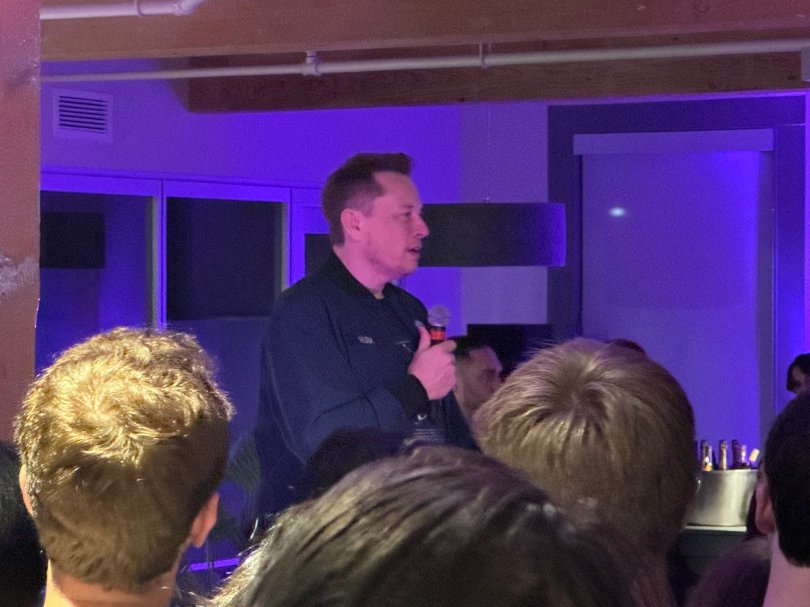
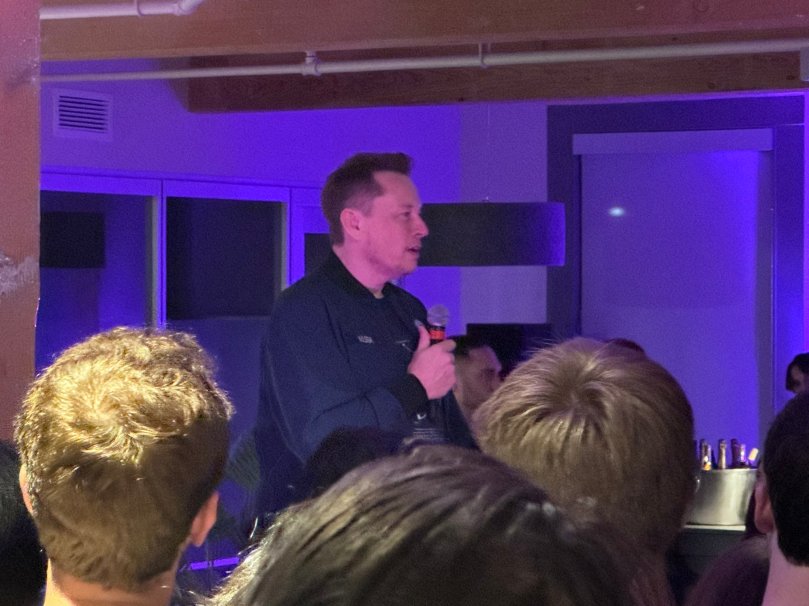








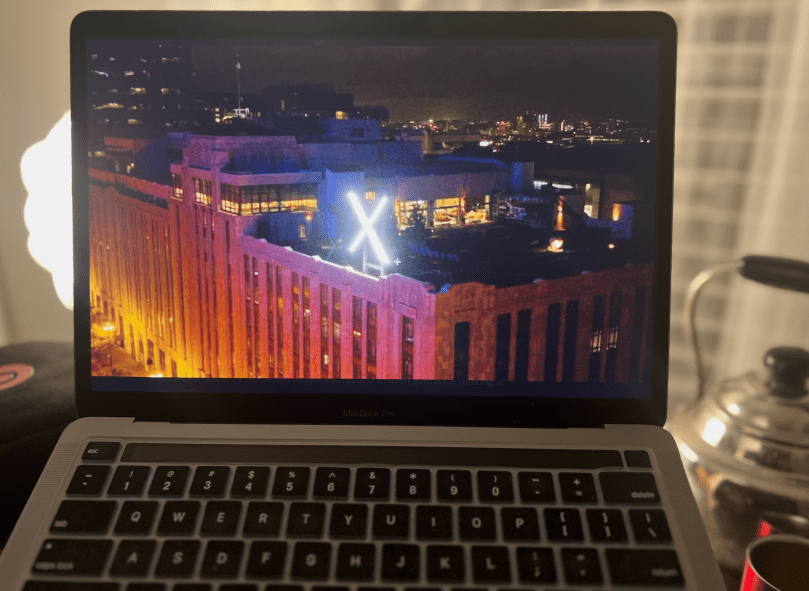
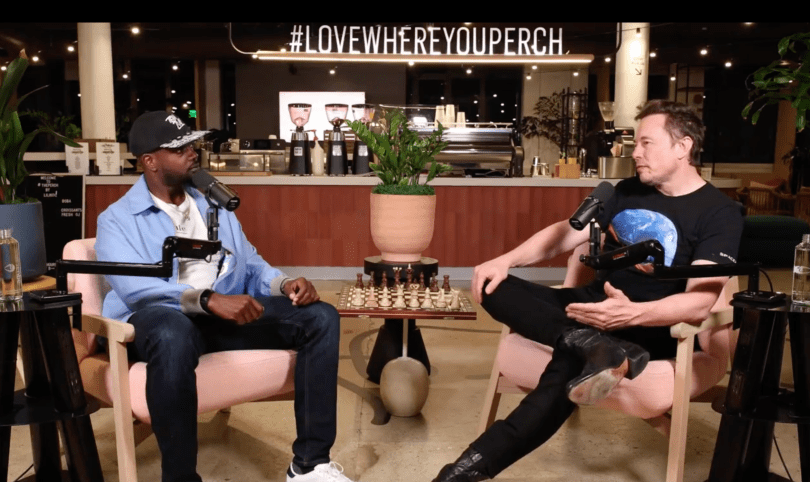

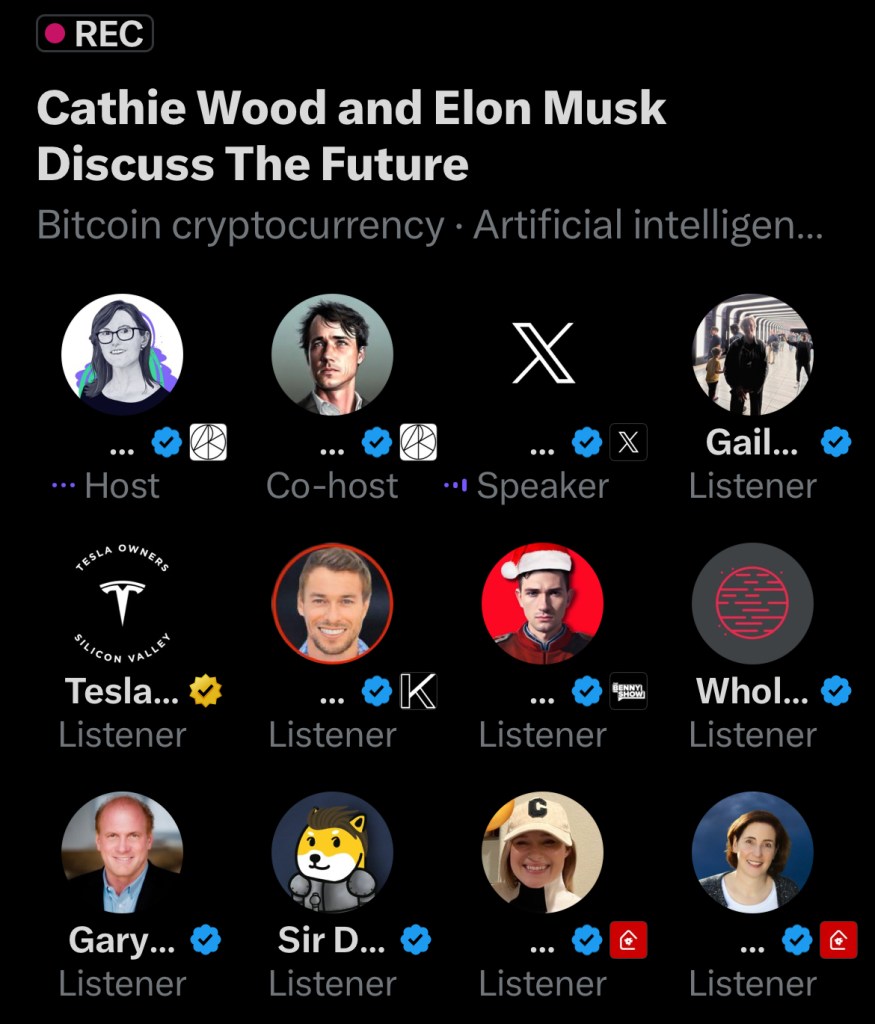

 whatsuptwitter.com